The Science of Sweat and Body Odor
A physiology-first explanation of perspiration, bacterial odor formation, and why modern underarm care should support the skin instead of suppressing it.
Understanding the Physiology of Perspiration

Perspiration is a fundamental thermoregulatory mechanism essential to human physiology.
The human body contains approximately 2-4 million sweat glands, which produce sweat primarily to maintain core body temperature within optimal ranges during physical exertion, environmental heat exposure, or periods of emotional stress.
Humans possess exceptional sweating capacity compared to most mammals, enabling superior heat dissipation through evaporative cooling.
This evolutionary adaptation allows sustained physical activity and efficient thermal regulation—a critical factor in human endurance and performance.
Contrary to common misconception, perspiration itself is not problematic. In fact, sweating is a marker of metabolic activity and proper physiological function.
The Biochemistry of Body Odor
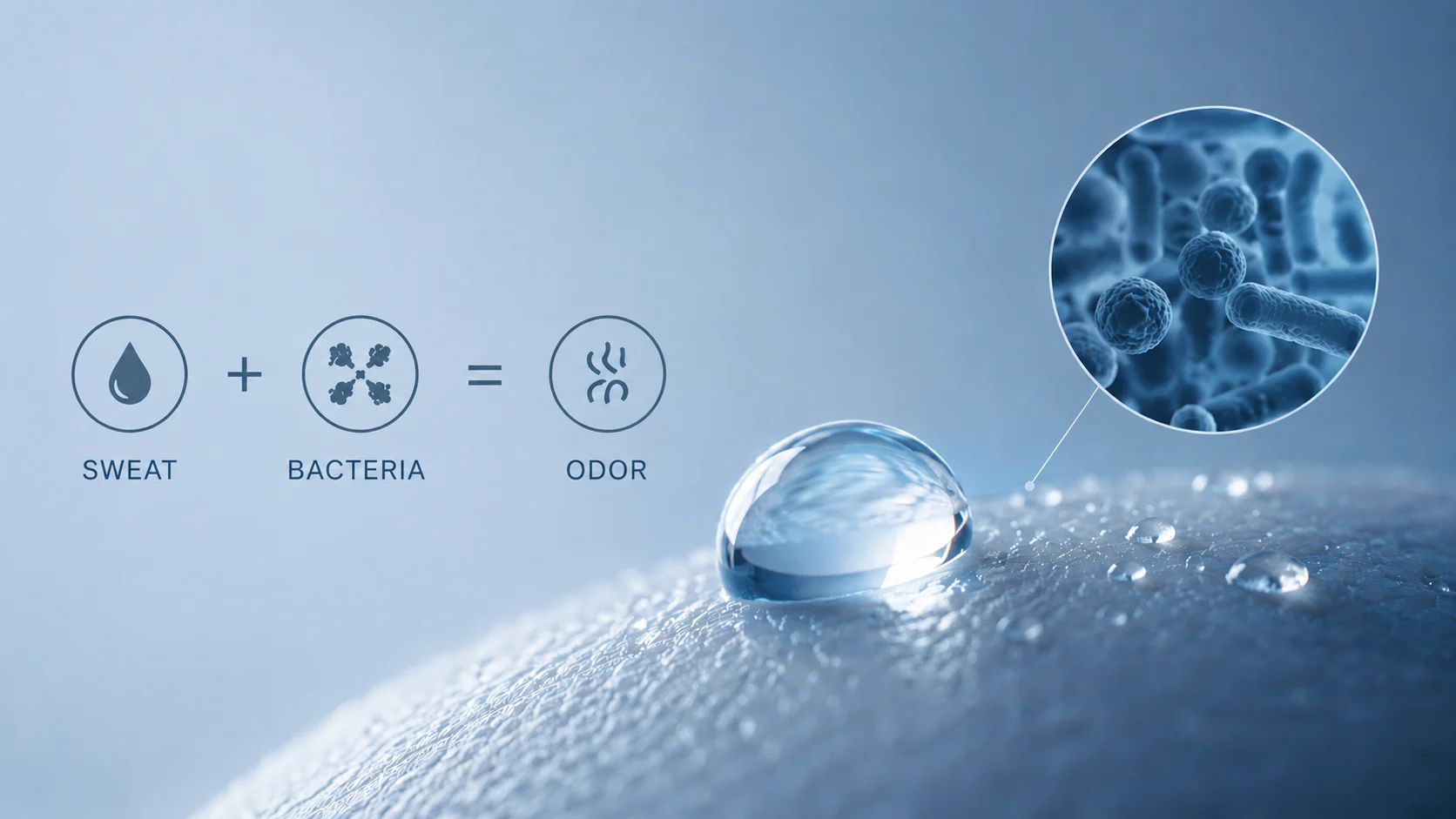
The distinction between perspiration and body odor is crucial to understanding effective personal care strategies.
Sweat composition: Eccrine sweat, which comprises the majority of perspiration, consists of approximately 99% water, along with trace amounts of electrolytes (sodium, potassium, chloride), urea, and lactate.
In its freshly secreted state, this fluid is essentially odorless.
Odor formation: Body odor develops through a secondary bacterial process.
The underarm region contains apocrine sweat glands that secrete a protein-rich fluid.
When resident skin microbiota—particularly Corynebacterium and Staphylococcus species—metabolize these proteins and lipids, they produce volatile organic compounds including:
- Isovaleric acid
- Propionic acid
- 3-methyl-2-hexenoic acid (3M2H)
- Various short-chain fatty acids
These metabolic byproducts are the actual source of characteristic body odor, not the perspiration itself.
Clinical implication: Effective odor management requires addressing the microbial activity that generates malodorous compounds, rather than attempting to eliminate perspiration entirely.
Limitations of Conventional Antiperspirant Approaches
Traditional antiperspirant products typically employ aluminum-based compounds (aluminum chlorohydrate, aluminum zirconium) that temporarily obstruct sweat gland ducts, reducing perspiration output by 20-40%.
While these products can effectively reduce moisture, several considerations warrant attention:
Physiological concerns:
- Interference with natural thermoregulation
- Potential disruption of the skin's microbiome balance
- Temporary blockage of normal glandular function
Dermatological considerations:
- The underarm region features thin, sensitive skin prone to irritation
- Occlusion of sweat glands may contribute to folliculitis or contact dermatitis in susceptible individuals
- Prolonged use of barrier-forming agents may affect skin barrier function
Symptomatic vs. root-cause approach:
- Antiperspirants address moisture (a symptom) rather than odor generation (the primary concern)
- Heavy fragrances may mask rather than eliminate odor
- Does not support the skin's natural protective mechanisms
Evidence-Based Principles of Modern Odor Control
Contemporary approaches to underarm care emphasize a more physiologically aligned strategy:
1. Targeted Antimicrobial Action
Rather than blocking perspiration, modern formulations focus on modulating the bacterial populations responsible for odor production.
This can be achieved through:
- Natural antimicrobial agents (zinc compounds, magnesium hydroxide)
- Prebiotic ingredients that support beneficial skin flora
- Enzymatic ingredients that neutralize odor-causing compounds before they form
2. Preservation of Natural Function
Allowing normal perspiration while controlling odor maintains:
- Thermoregulatory efficiency
- Natural detoxification pathways
- Skin microbiome diversity and balance
3. Dermatological Compatibility
Effective formulations prioritize:
- pH balance appropriate to underarm skin
- Absence of known irritants and sensitizers
- Non-occlusive, breathable protection
- Hypoallergenic ingredient profiles
4. Sustained Efficacy
Quality odor control should provide:
- Extended protection through microbial management rather than fragrance masking
- Residual antimicrobial activity that continues throughout the day
- Comfort without reapplication dependency
The Physiologically Aligned Approach to Freshness
Modern underarm care represents a paradigm shift from suppression to support.
Rather than viewing perspiration as a problem requiring elimination, this approach recognizes it as a normal physiological process while addressing the actual source of concern: bacterial odor production.
Characteristics of effective natural deodorant formulations:
- Gentle antimicrobial activity: Selective reduction of odor-causing bacteria without eliminating beneficial skin flora
- Absorbent minerals: Natural ingredients like arrowroot powder or kaolin clay that manage moisture without blocking glands
- Skin-conditioning agents: Ingredients that support barrier function and comfort
- Transparency: Clear ingredient lists free from parabens, phthalates, and synthetic fragrances
This methodology delivers confidence through genuine odor prevention rather than temporary masking or physiological suppression.
Clinical Perspective: Reconciling Function with Freshness
From a physiological standpoint, perspiration indicates metabolic activity, physical engagement, and normal stress responses. It is neither pathological nor undesirable—it is evidence of a functioning thermoregulatory system.
Body odor, conversely, results from bacterial metabolism and is entirely preventable through appropriate antimicrobial care strategies.
The distinction is critical: effective personal care works in concert with the body's natural processes rather than attempting to override them.
Conclusion: Supporting Natural Function While Maintaining Freshness
Perspiration is an essential physiological process indicative of health, activity, and normal human function. It should be recognized as such rather than stigmatized.
Body odor, however, represents a preventable outcome of bacterial activity—one that can be effectively managed through scientifically informed product selection.
By choosing underarm care products that address odor at its microbial source while respecting the skin's natural processes, individuals can maintain optimal freshness and confidence without compromising physiological function or dermatological health.
Key takeaway: Perspiration is a natural, healthy process. Body odor is a preventable bacterial byproduct.Effective modern deodorant care addresses the latter while supporting the former, delivering comfort, confidence, and compatibility with human physiology.